
Precision Time Protocol (PTP) is a network protocol used to synchronize clocks across devices on an Ethernet network with sub-microsecond accuracy. In industrial automation, PTP ensures motion systems stay in sync—whether you’re running a single machine or an entire facility. When implemented correctly, it delivers stability and predictable performance. When it’s not, you can see motion faults, drive sync failures, and unpredictable behavior that’s tough to troubleshoot.
Here’s what you need to know to avoid common pitfalls and design a network that keeps your motion applications running smoothly.
Why PTP Can Cause Problems
PTP issues often trace back to network design. Unmanaged switches, network congestion, or misconfigured clocks can all disrupt timing. For example, if unmanaged switches sit between your PLC and drives, critical time packets can be delayed by general network traffic. The result? Increased jitter, motion faults, and downtime.
Other common challenges include:
- Multiple Grandmaster Clocks: Misconfigured priorities can cause devices to jump between clocks, creating instability.
- VLAN or Multicast Filtering: IGMP snooping or VLAN misconfigurations can block PTP packets, breaking synchronization.
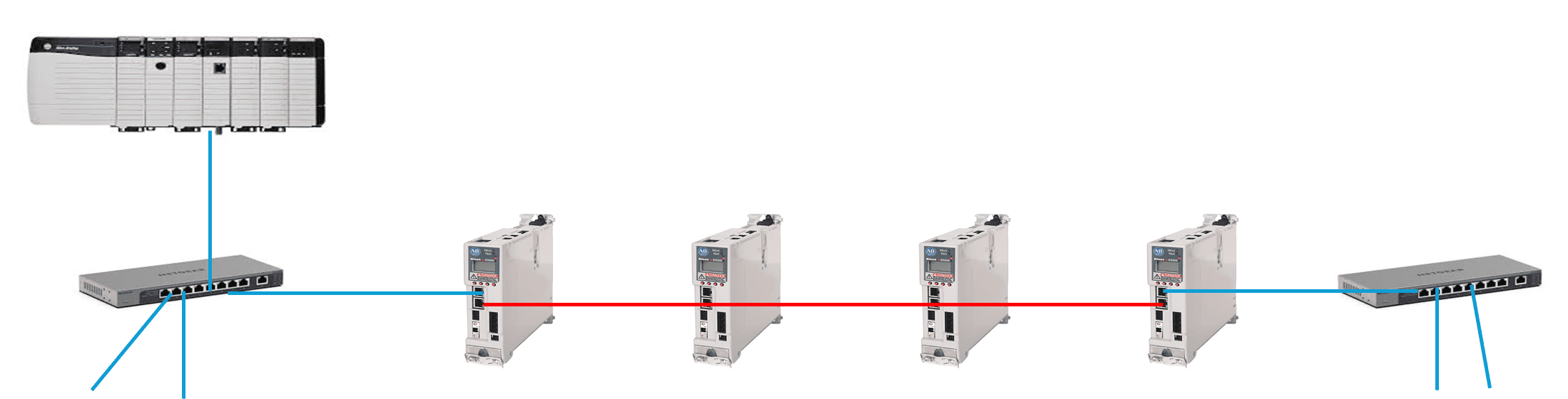
In the example below, we have a linear series of drives that connect to an unmanaged switch to provide network access to the PLC. The two unmanaged switches also provide network access to other control devices. While in theory this could work and we may see successful network connections, this design creates a bottleneck of network traffic as packets from both unmanaged switches are processed by the drives. This often results in critical time packets being delayed which can contribute to symptoms described above.
Better Network Designs
One proven approach is to physically separate motion traffic from general network traffic. For example, connect your drive segment directly to a PLC Ethernet interface, and use a secondary interface for other devices. This segmentation ensures time-sensitive packets reach motion devices without delay.
Another option is to use a managed, PTP-capable switch. These switches sync with the correct clock (often the PLC), compensate for latency, and prioritize motion traffic. They can also enforce VLAN segmentation and Quality of Service (QoS) to keep your network efficient and predictable.
In the example below, the drive segment connects directly to an Ethernet interface on the PLC, and the unmanaged switch connects to a secondary Ethernet interface on the PLC to provide access to other network devices. This allows the network traffic to be physically segmented, making sure the critical, time-sensitive packets reach the motion devices on time.

In the second example below, we use a managed, PTP-capable network switch to provide network access to both the drive segment and other network devices. The PTP switch is programmed to sync with the appropriate clock (often the PLC) and can compensate for network latency to make sure the motion traffic is accurate and on time. The managed switch also makes real-time decisions on the general network traffic, limiting the amount of unnecessary traffic that the drives process. If needed, we could also provide network segmentation through VLANs to further separate the drive segment from other network devices.

7 Best Practices for PTP and Motion
While every system is unique, these guidelines can help you avoid the most common issues:
- Use managed industrial switches instead of unmanaged ones.
- Choose PTP Boundary Clock switches for accurate time distribution.
- Keep motion devices in the same VLAN to reduce complexity.
- Minimize hops between the master clock, PLC, and drives.
- Avoid mixing motion traffic with large data streams on unmanaged switches.
- Enable QoS on managed switches to prioritize PTP and motion traffic.
- Monitor PTP offset and sync status regularly to catch issues early.
Bottom Line for Implementing PTP
There’s no one-size-fits-all design for industrial networks but following these best practices will help you build a stable, predictable motion system. If you’d like help reviewing your architecture or implementing PTP correctly, our specialists can guide you through design, configuration, and validation.
Charlie Dahlstrom | Industrial Network & Cybersecurity Specialist
Charlie Dahlstrom is an expert in secure network architecture for manufacturing and industrial environments. With a BA in Information Systems Management from Wayne State University and 12 years of experience in business development and industrial technology, he combines technical and business insight to drive networking and cybersecurity initiatives. Passionate about the rapid evolution of manufacturing technology, Charlie advises newcomers to “be a sponge—listen and learn from those with experience.”